To begin, we learn a sound a day. We use pure sounds so that your child will be able to blend the sounds into words more easily. We then use ‘Fred talk’ to sound out words. Fred talk helps children read unfamiliar words by pronouncing each sound in the word one at a time. Children can start blending sounds into words as soon as they know a small group of letters well. At the start we use magnetic boards and magnetic letters to build the words. The first words that we start to blend, are the following:
Phonics
Phonics at Gawsworth Primary School

‘Read Write Inc.’ at Gawsworth Primary School
At Gawsworth Primary School we aim for all of our children to become fluent, confident readers who are passionate about reading. We are incredibly proud to implement Read Write Inc Phonics (RWI) as our synthetic phonics programme, to give our child the best possible start with their Literacy development.
Children who read regularly or are read to regularly have the opportunity to open the doors to so many different worlds!
Read, Write Inc. (RWI) is a synthetic phonics programme that has been designed carefully to help children of all abilities to make rapid progress, as well as allowing us to support you, in fostering a love of reading in your child that will last a lifetime! We work with our families, providing a range of supportive interactive phonics workshops throughout the academic year. Please find the PowerPoint presentations linked to these sessions;
Click on the links below to access the following resources;
PHONICS-presentation-2025-2026
phonics screening check information powerpoint
Parent Guide to listening to your child read at home
At the core of the programme is the lively and vigorous teaching of synthetic phonics. Children learn the 44 common sounds in the English language and how to sound-blend words for reading (decoding) at the same time as developing writing skills and spelling (encoding).
As their confidence in decoding develops they are taught to comprehend and compose ideas for their own writing. The children have the pleasure of reading exciting storybooks perfectly matched to their level – so that they have early success in reading!
The programme begins in the Foundation Stage (Year Reception) and extends into KS1. The children follow a structured programme of daily reading and writing activities and are regularly assessed (every 6-8 weeks), to ensure they are in the appropriate streamed group to meet their needs. Mrs Jepson is our Phonics Lead and works closely with staff to ensure that all of our team have been fully trained in the delivery of this programme. Mrs Jepson also supports staff with coaching and mentoring sessions linked to the teaching of phonics.
RWI. has 5 underlying principles – the five Ps:
- PACE – no time is wasted during teaching sessions! Children are active and involved in a fun and creative way. Children are reminded to give their teacher their ‘magnet eyes’ and ‘listening ears’!
- PRAISE – teachers praise the children constantly throughout the teaching sessions. Children learn more quickly when they are praised for what they do well, rather than nagged for what they do wrong. The children are encouraged to praise each other and as a school we have developed several ‘Praise Phrases’ and ‘Praise actions’! Ask your child to demonstrate!
- PURPOSE – each activity has a very clear purpose. The teacher will set this purpose at the beginning of the lesson, so that the children know exactly what they will be learning.
- PARTICIPATION – all children take part in all parts of the lesson. Full participation is gained through partner work and choral response.
- PASSION – as a staff we are passionate about our teaching and the benefits of the Read, Write Inc. programme! We love teaching the sessions and this enthusiasm rubs off onto the children.
How will my child be taught to read?
Meet Fred Phonics – 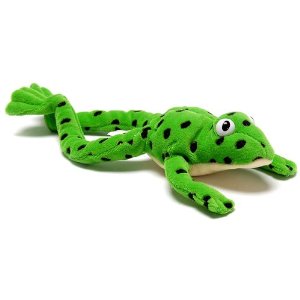
Fred supports us in teaching phonics to the children in the Reception class. This means that they learn how to ‘read’ the sounds in words and how those sounds can be written down. This is essential for reading, but it also helps children learn to spell well. We teach the children simple ways of remembering these sounds and letters. We will initially focus upon the Set 1 sounds, before moving on to teach the Set 2 & 3 sounds as children progress through Reception & KS1.
Reading
The children:
- learn 44 sounds and the corresponding letters/letter groups using simple picture prompts – see below
- learn to read words using Fred talk and sound blending
- read from a range of storybooks and non-fictions books matched to their phonic knowledge
- work well with partners
- develop comprehension skills in stories by answering ‘Find It’ and ‘Prove It’ discussion questions
Writing
The children:
- learn to write and form the letters/letter groups which represent the 44 sounds with the help of fun phrases
- learn to write words by using Fred Talk
- learn to build sentences by practising sentences out loud before they write
Talking
The children
- They work in pairs so that they:
- answer every question
- practise every activity with their partner
- take turns in talking and reading to each other
- develop ambitious vocabulary
Children will be taught how to read as follows:
Before you start to teach your child, practise saying the sounds below. These are the sounds we use to speak in English.
Fred Talk
We use pure sounds (‘m’ not’ muh’,’s’ not ‘suh’, etc.) so that your child will be able to blend the sounds into words more easily.
At school we use a puppet called Fred who is an expert on sounding out words! we call it, ‘Fred Talk’. E.g. m-o-p, c-a-t, m-a-n, sh-o-p,
b-l-a-ck.
The children are taught the sounds in 3 sets.
Step 1:
Set 1 speed sounds
Set 1 Sounds are taught in the following order together with rhymes to help children form the letters correctly and instantly recognise sounds ready for blending.
Click on the links below to access the following resources;
Set 1 letter formation pictures and rhymes
| Set 1 | |
| Sound | Rhyme |
| m | Down Maisie then over the two mountains. Maisie, mountain, mountain. |
| a | Round the apple, down the leaf. |
| s | Slide around the snake |
| d | Round the dinosaur’s back, up his neck and down to his feet. |
| t | Down the tower, across the tower, |
| i | Down the insects body, dot for the head. |
| n | Down Nobby and over the net. |
| p | Down the plait, up and over the pirates face. |
| g | Round the girls face, down her hair and give her a curl |
| o | All around the orange |
| c | Curl around the caterpillar |
| k | Down the kangaroos body, tail and leg |
| u | Down and under the umbrella, up to the top and down to the puddle |
| b | Down the laces, over the toe and touch the heel |
| f | Down the stem and draw the leaves |
| e | Slice into the egg, go over the top, then under the egg |
| l | Down the long leg |
| h | Down the horse’s head to the hooves and over his back |
| sh | Slither down the snake, then down the horse’s head to the hooves and over his back |
| r | Down the robot’s back, then up and curl |
| j | Down his body, curl and dot |
| v | Down a wing, up a wing |
| y | Down a horn, up a horn and under the yak’s head. |
| w | Down, up, down, up the worm. |
| th | Down the tower, across the tower, then down the horse’s head to the hooves and over his back |
| z | Zig-zag-zig, down the zip. |
| ch | Curl around the caterpillar, , then down the horse’s head to the hooves and over his back |
| qu | Round the queen’s head, up to her crown, down her hair and curl |
| x | Cross down the arm and leg and cross the other way |
| ng | A thing on a string |
| nk | I think I stink |
Please do not use letter names at this early stage.
Children will also use pictures for each sound to help recognise the sound and then form the shape of the sound. Below is a link to access a differentiated list of X7 word sets to support word blending.
Are the sounds bouncy or stretchy sounds?
Click on the links below to access the following resources;
Set 1 letter formation pictures and rhymes
Set 1 Bouncy or Stretchy sounds.pdf
Bouncy sounds (short sounds)
As part of the ‘Read, Write, Inc’ phonics programme each sound has a saying to help us remember the correct sound. Some of the sounds that we learn are short, sharp & bouncy and need to be sounded at as follows;
Make the sound as short as possible avoiding uh at the end of the sound:
t – t-t-t tower (tick tongue behind the teeth – unvoiced) – Down the tower, across the tower
p – p-p-p pirate (make distinctive p with lips – unvoiced) – Down the plait, up and over the pirate’s face
k – k-k-k kangaroo (make sharp click at back of throat) – Down the kangaroo’s body, tail and leg
c – c-c-c caterpillar (as above) – Curl round the caterpillar
h – h-h-h horse (say h as you breathe sharply out – unvoiced) – Down the horse’s head to his hooves and up over his back
ch – The caterpillar’s hairs make the horse sneeze ch-ch-ch (make a short sneezing sound) – Curl round the caterpillar, then down the horse’s head, to his hooves and up over his back
x – x-x-x exercise (say a sharp c and add s – unvoiced)– Cross down the arm and leg and cross the other way
You might find it harder to avoid saying uh at the end of these bouncy sounds.
d – d-d-d dinosaur (tap tongue behind the teeth) – Round the dinosaur’s bottom, up his tall neck and down to his feet
g – g-g-g girl (make soft sound in throat) – Round the girl’s face, down her hair and give her a curl
b – b-b-b boot (make a short, strong b with lips) – Down to the heel, up and over the toe
j – j-j-j Jack-in-the-box (push lips forward) – Down his body, curl and dot
y – y-y-y yak (keep edges of tongue against teeth) – Down a horn, up a horn and under the yak’s head
w – w-w-w worm (keep lips tightly pursed) – Down, up, down, up the worm
qu – qu-qu-qu queen (keep lips pursed as you say cw- unvoiced) – Round the queen’s head, up to her crown, down her hair and curl
Stretchy sounds (long sounds)
Some of the sounds that we learn have a longer sound that we can should stretch out as we say the sound aloud. The stretchy sounds should be said as follows:
Try to avoid saying uh after each one:
m – mmmmmmountain (keep lips pressed together hard) – Maisie, mountain, mountain
s – sssssnake (keep teeth together and hiss – unvoiced) – Slither down the snake
n – nnnnnnet (keep tongue behind teeth) – Down Nobby, up, over his net
f – ffffflower (keep teeth on bottom lip and force air out sharply – unvoiced) – Down the stem and draw the leaves
l – llllleg (keep pointed curled tongue behind teeth) – Down the long leg
r – rrrrrrobot (say rrr as if you are growling) – Down the robot, up and over his arm
v – vvvvvvulture (keep teeth on bottom lip and force air out gently) – Down a wing, up a wing
z – zzzzzzip (keep teeth together and make a buzzing sound) – Zig-zag-zig
th – thhhhank you ( stick out tongue and breathe out sharply) – Down the tower, across the tower, then down the horse’s head to the hooves and up over his back
sh – shhhh said the horse to the hissing snake (shhh noise as in ‘be quiet!’) – Slide down the snake, then down the horse’s head to the hooves and over his back
ng – thinnnnngg on a strinnnngg (curl your tongue at the back of your throat) – Down nobby, up, over his net then round the girl’s face, down her hair and give her a curl
nk – I think I stink (i.e ‘nk’ in oink) – Down nobby, up, over his net then down the kangaroo’s body, tail and leg
Please do not hesitate to ask any of our friendly team if you have any questions or would like some help!
Click on the links below to access the following resources;
Word Time X7 differentiated word lists
Step 2:
The children are then taught Set 2 Sounds – the long vowels. When they are very confident with all of set 1 and 2 they are taught Set 3 Sounds.
Set 2 speed sounds
Once your child knows all Set 1 sounds by sight uses them to blend to read words, we start teaching Set 2 initially and then Set 3 long vowel sounds.
We now start to learn that two or three letters together can make one sound. We call them ‘special friends’.
Click on the links below to access the following resources;
Set 3 speed sounds
After learning the Set 2 sounds, your child will have learnt one way in which each long vowel sound is written. When learning their Set 3 speed sounds, they will be taught that there are more ways in which the same sounds are written, e.g. ee as in tree, and ea as in tea.
Reading Set 3 speed sounds will be taught for most of Year 1, and spelling the Set 3 speed sounds during Year 2. When your child learns their Set 3 sounds in school they will learn:
• The letters that represent a speed sound e.g. ‘ea’
• A simple picture prompt linked to the ‘speed sound’ and a short phrase to say e.g. ‘cup of tea’
There are 20 Set 3 speed sounds that are made up of two or three letters which represent just one sound, e.g. ea as in tea, ow as in cow, and are as in care. As before, it is important that your child does not pronounce these as 2 or 3 separate sounds.
When a sound contains two letters that makes just one sound e.g. ‘ea’, we call it a‘digraph’. When a sound contains three letters that make just one sound e.g. ‘ure’, we call it a ‘trigraph’. When a sound has two letters, which work as a pair to make one sound, but are separated with the word e.g. ‘a-e’ (cake), we call it a‘split digraph’.
Click on the links below to access the following resources;
| Long vowel sound | Set 2 Speed Sound cards
Teach these first |
Set 3 Speed Sound cards | |
| ay | ay: may I play | a-e: make a cake | ai: snail in the rain |
| ee | ee: what can you see | ea: cup of tea | e: he me we she be |
| igh | igh: fly high | i-e: nice smile | |
| ow | ow: blow the snow | o-e: phone home | ao: goat in a boat |
| oo | oo: poo at the zoo | u-e: huge brute | ew: chew the stew |
| oo | oo: look at a book | ||
| ar | ar: start the car | ||
| or | or: shut the door | aw: yawn at dawn | |
| air | air: that’s not fair | are: share and care | |
| ir | ir: whirl and twirl | ur: nurse for a purse | er: a better letter |
| ou | ou: shout it out | ow: brown cow | |
| oy | oy: toy for a boy | oi: spoil the boy | |
| ire | ire: fire fire! | ||
| ear | ear: hear with your ear | ||
| ure | ure: sure it’s pure? |
Sound families
We learn to distinguish between the sounds that sound the same but have different spellings. E.g., we learn that , and all sound the same and we learn the correct spelling for words like day, rain, cake, play, train, shake.
Click on the links below to access the following resources;
Nonsense words (Alien words)
As well as learning to read and blend real words children will have plenty of opportunities to apply their sound recognition skills on reading ‘Nonsense words’. These are made up of the sounds the children are learning e.g. d-u-t (dut), d-oi-n (doin), h-e-sh (hesh).
Step 3:
Children will be introduced to ‘Ditty books’ when they successfully begin to read single words. The short vowels should be kept short and sharp:
Children use sound-blending (Fred Talk) to read short ditties. They will bring these home once they have read and discussed the book in class. Children will then be challenged to use their developing phonic knowledge to write short sentences.
Within all the books children will have red and green words to learn to help them to become speedy readers. Red words are words that are not easily decodable and challenge words to extend children’s vocabulary. Green words are linked to the sounds they have been learning and are easily decodable. Please follow the link below to see an overview of the progression mapping of tricky words within the programme.
Click on the links below to access the following resources;
Dots and dashes represent the sound each letter makes.
During the RWI session children will read the book three times and at each new reading they will have plenty of opportunities to practise using their developing comprehension skills. You may have heard your child talking about ‘hold, edit or build a sentence’.
Hold a sentence is an activity that encourages children to remember a whole sentence while focusing on spelling and punctuation.
Build a sentence is to give children the opportunity to create their own sentence to that shows the meaning of a word and edit a sentence allows the children to critique a sentence using their knowledge of spelling punctuation and grammar. Children complete a longer piece of independent writing, which gives them the opportunity to show off their creativity and to practice their spelling, grammar and punctuation.
Spelling
Spelling will only start in Reception when children are ready to write and form their letters. Children will use first use ‘Fred fingers’ to first sound out a word before they write it down. Children learn how to spell rather than just get tested. Furthermore, this way of teaching spellings allows children to use Fred fingers whenever they get stuck with spelling a word. Children pinch each sound on fingers before writing the word.
For further information please take a look at the following documents, or feel free to reach to your child’s class teacher or Mrs Jepson – Phonics Lead.
Click on the links below to access the following resources;
RW Inc. Phonics & Reading Progression
Gawsworth RW Inc Phonics Progression
QR Codes to access video clips linked to: Set 1 2 3 Speed Sounds
Tricky red word bookmarks according to colour band
Please find below a copy of letters providing information as to how you can support to develop fluency in their reading at home. The letters are linked to the different levels & colour bands that your child will work through & are in order of progression;
Set 1 phonics home activity booklet